
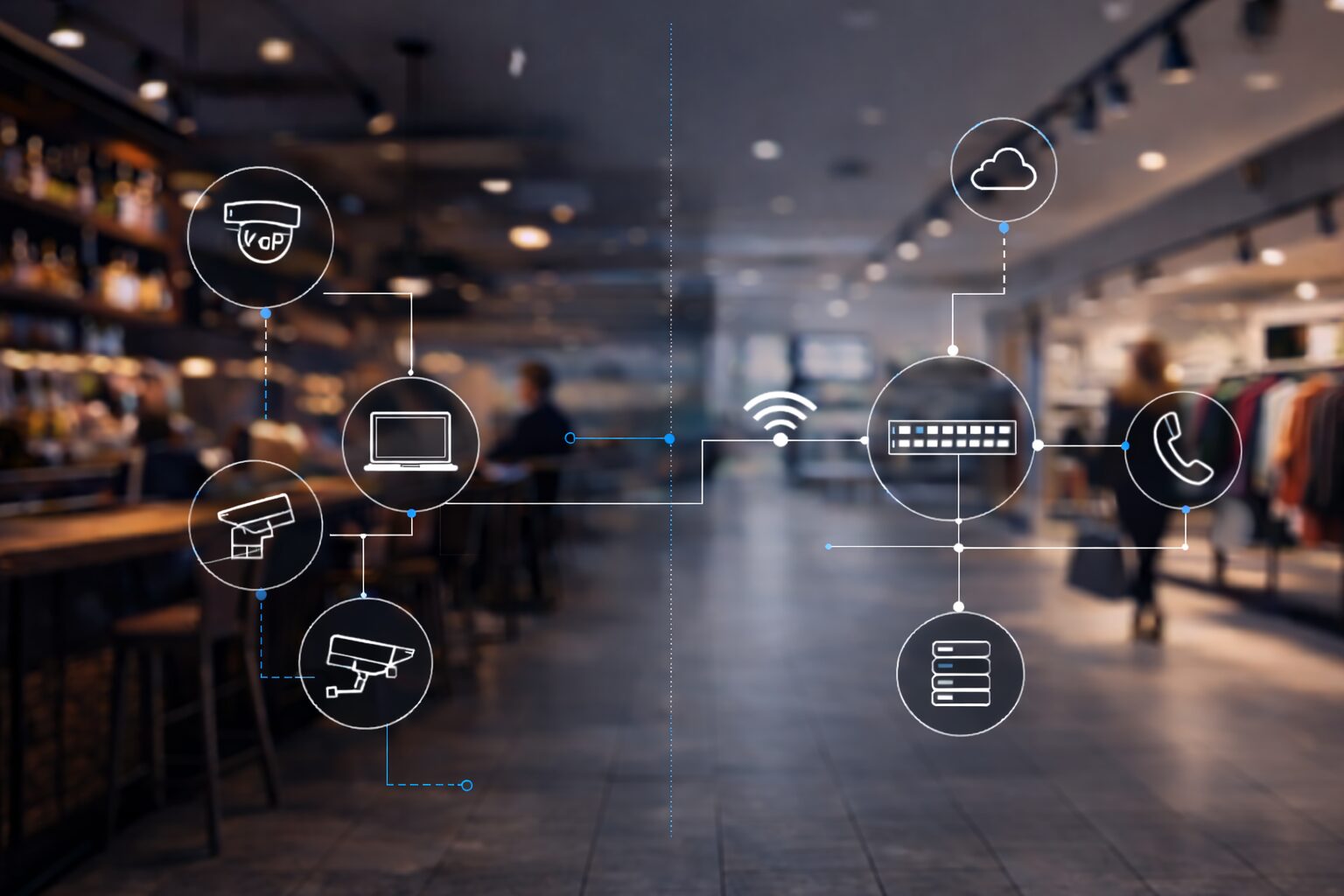
Security & IT for Wisconsin Hospitality and Retail: Boosting Efficiency & Reducing Theft
How Unified Technology Solutions Protect and Streamline Bars, Restaurants, and Retail Stores
Introduction: The Dual Challenge of Security and Technology
Wisconsin hospitality venues — including bars, restaurants, lodging properties, and retail stores — face a daily juggling act. They must manage customer flow, inventory, staffing, and the ongoing risk of both security and technology disruptions.
Whether it’s a Milwaukee brewery concerned about incidents or a Brookfield retail store struggling with unreliable Wi-Fi, these businesses operate under constant pressure. Theft and shrinkage erode already slim margins. Tech failures — like a POS system crashing on a Friday night — can halt revenue instantly.
Many hospitality and retail operators still rely on fragmented security and IT systems. Cameras, alarms, and IT support often come from separate vendors. This patchwork approach creates blind spots, inefficiencies, and finger-pointing when issues arise. When internet service drops or cameras go offline, resolution is slower and accountability unclear.
The result: more troubleshooting and less focus on customers.
Unique Challenges in Hospitality and Retail
- High Foot Traffic & Theft Risk: Busy environments invite shoplifting, dine-and-dash incidents, and employee theft — making integrated security essential.
- Tight Margins & Turnover: Slim profits mean outages and shrinkage have immediate impact. Frequent staff changes require disciplined access control management.
- Reliance on Technology: Internet, POS systems, Wi-Fi, cameras, and access control are operational essentials. Any disruption creates vulnerability.
- Multi-Location Complexity: Growth adds locations, each requiring consistent IT and security standards. Without integration, oversight becomes inefficient.
Hospitality and retail businesses must balance exceptional service with loss prevention and reliable IT infrastructure — across one location or many.
The Risk of Fragmented IT and Security Systems
Disconnected systems create measurable risk:
- Gaps in Security Coverage: Cameras, alarms, and access control operating independently create blind spots.
- Slower Response to Problems: Multiple vendors mean longer downtime during IT outages or incidents.
- Complex Management & Higher Costs: Managing separate platforms increases administrative fatigue and missed updates.
- Inconsistent User Access Control: Without centralized oversight, former employees may retain system or facility access.
Bottom line: Fragmented IT and security systems increase operational risk and cost — exactly where hospitality and retail businesses can least afford it.
The Upside: Benefits of Integration
When IT and physical security operate as a unified system, operations stabilize and risk decreases.
- Unified Technology & Security Solutions: One platform to monitor and manage infrastructure.
- Streamlined Operations: A single provider reduces complexity and finger-pointing.
- Faster Incident Response: Real-time alerts and remote access minimize downtime.
- Reduced Theft & Loss Prevention: High-resolution cameras and smart access controls improve deterrence and documentation.
- Simplified Management: Remote updates and maintenance improve system reliability.
- Scalability: Cloud-managed systems expand cleanly as new locations open.
A unified approach transforms IT and security from a reactive burden into a strategic operational asset.
What Does Modern Security Look Like?
Integrated systems are practical, not theoretical. For businesses, modern integration includes:
- All-in-One Dashboard: Manage cameras, unlock doors, monitor device health, and receive real-time alerts from a single interface.
- Smart Cameras & Access Control: View footage instantly, track entry logs, and manage permissions centrally.
- Remote Intrusion Monitoring: Receive break-in alerts with video verification for faster decision-making.
- Remote Support & Updates: Diagnose and update systems without on-site disruption.
- Multi-Location Management: Oversee security and network settings across all locations from one dashboard.
Modern security combines hardware and software into a cohesive infrastructure — freeing owners to focus on growth instead of troubleshooting.
ICS’s One-Vendor, Full-Service Approach
ICS brings physical security and IT infrastructure under one roof for hospitality and retail businesses.
- One Partner for Everything: Cameras, alarms, structured cabling, networking, and IT support — unified under one point of accountability.
- Custom Solutions: Designed specifically for bars, restaurants, and retail environments — accounting for lighting, traffic, and bandwidth needs.
- Remote Access & Management: 24/7 visibility into security feeds and network health.
- Scalable Infrastructure: Cloud-managed platforms designed for single or multi-site growth.
- Reliable Local Support: Wisconsin-based service with enterprise-grade technology and manufacturer backing.
- Wisconsin-Wide Service: On-site and remote assistance statewide.
ICS handles assessment, design, installation, configuration, monitoring, and ongoing support — delivering turnkey integration from day one.
Conclusion: Safer, Smarter Operations Are Within Reach
Hospitality and retail operators already manage enough complexity. Technology should simplify operations — not create new vulnerabilities.
Integrated IT and security systems reduce theft, minimize downtime, and eliminate vendor confusion. By unifying your infrastructure, you protect both your revenue and your operational stability.
You don’t need to become an expert in cameras or networks. You need a partner who ensures those systems operate cohesively and reliably.
Ready to see what unified security and IT can do for your business?
Contact ICS today for a no-obligation consultation and virtual demo.
Stronger security. Reliable uptime. One accountable partner.